Starting from what a program even is and how a language works, through the full foundations of Core Java, to connecting it with an Oracle database. Built for people entirely new to programming.
In this category
Programming Fundamentals
Questions about admission, fees or batch timing? Tell us and we will get in touch.
Variables, conditions, loops and functions — the ideas underneath every language, before you decide which one to learn. Completely free.
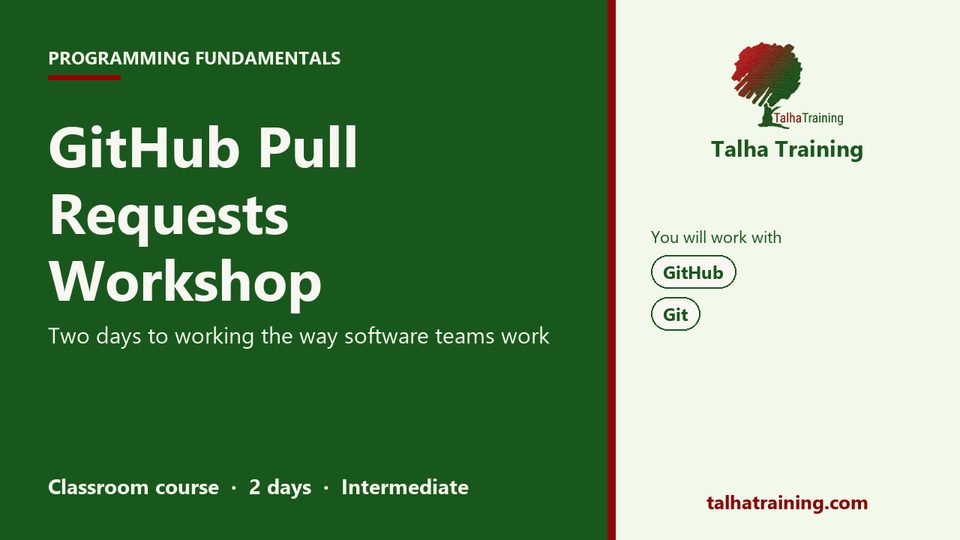
A two-day classroom workshop on GitHub's pull request documentation: forks and branches, creating a pull request, requesting and giving reviews, incorporating feedback, resolving merge conflicts and merging. The class works as one team on a shared repository. This workshop prepares for no exam.
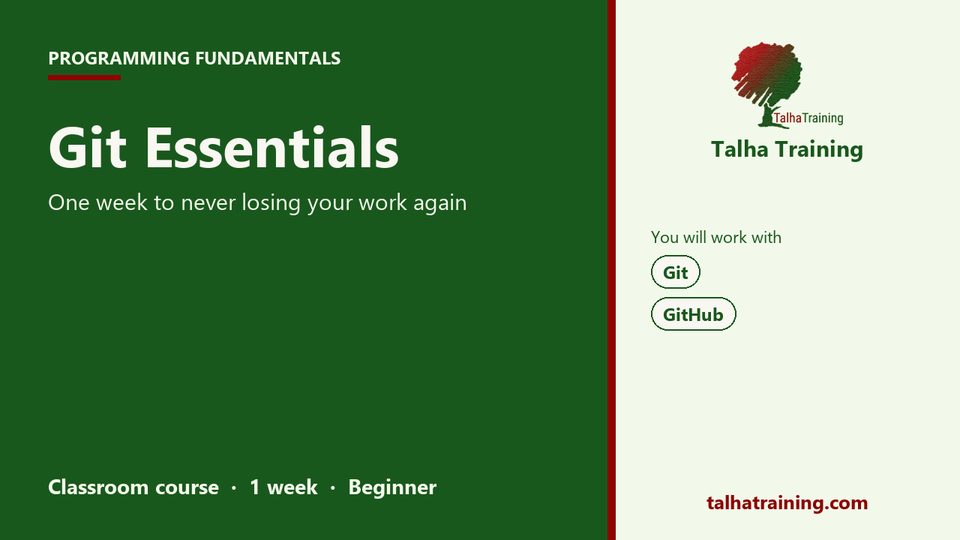
A one-week classroom course on the first two chapters of the Pro Git book: getting started, and Git basics. You set Git up, record changes, read the history, undo mistakes and work with a remote repository. This course prepares for no exam.
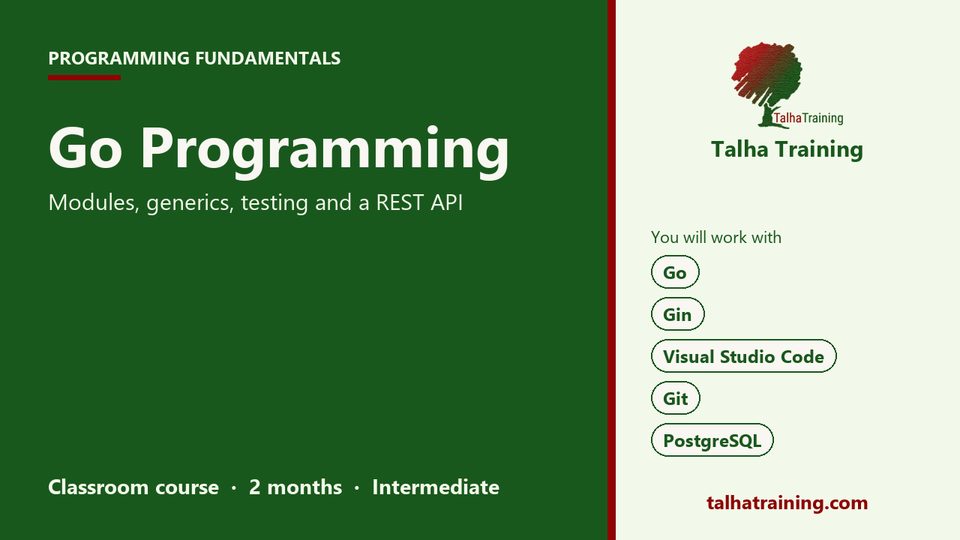
A classroom course in Go for people who already program. It follows the Getting Started path of the official Go documentation: A Tour of Go, how to write Go code, creating a module, multi-module workspaces, generics, fuzzing, writing web applications, and developing a RESTful API with Go and Gin. This course prepares for no exam.
A three-month classroom course that follows the chapters of The Rust Programming Language, the book the Rust project itself publishes (Rust 1.97, 2024 edition): ownership, structs and enums, collections, error handling, generics and traits, testing, iterators and closures, smart pointers, concurrency and async, ending with the book's own multithreaded web server project. This course prepares for no exam.
A classroom course in solving problems efficiently. The topics are those of MIT's published Introduction to Algorithms syllabus (6.006): modelling computational problems and measuring performance; the data structures dynamic arrays, hash tables, heaps and balanced binary search trees; and the algorithmic approaches sorting, graph searching and dynamic programming. Problems are solved in Python. This course is not affiliated with MIT and prepares for no exam.
A one-week classroom course on two topic areas of MIT's published Introduction to Algorithms syllabus (6.006): basic performance measures and sorting, with hash tables for fast lookup. Worked in Python. This course is not affiliated with MIT and prepares for no exam.
A classroom course in building production back ends in Java. The modules follow the sections of the Spring Boot 4.1 reference documentation: developing with Spring Boot, core features, web, data, messaging, security, testing, packaging, and production-ready features. This course prepares for no exam.
A two-week classroom course for complete beginners. It covers the first two sections of the Python Institute's PCEP-30-03 outline — programming and Python fundamentals, and control flow with conditions and loops — in the order the official Python tutorial introduces them. It is a start, not the whole exam syllabus, and prepares for no exam on its own.
A one-week classroom course on the first steps of the official Go documentation's Getting Started path: getting started, A Tour of Go, how to write Go code, and creating a module. For people who already program in another language. This course prepares for no exam.
A two-week classroom course on the familiar features that Microsoft's own tour of C# sets out: a first program and the dotnet CLI, the type system, control statements, methods, classes and exceptions. This course prepares for no exam.
A two-day classroom workshop on MDN's regular expressions guide: simple patterns, special characters, character classes, quantifiers, assertions, groups and backreferences, and flags. You practise on real text — phone numbers, emails and log lines. This workshop prepares for no exam.
A two-day classroom workshop on the third chapter of the Pro Git book, Git branching: branches in a nutshell, basic branching and merging, branch management, branching workflows, remote branches and rebasing. This workshop prepares for no exam.
A classroom course in C# on the .NET platform. The modules follow the features Microsoft's own tour of C# sets out: the type system, classes, structs, records and interfaces, generics, methods, properties and events, exceptions, pattern matching, tuples and collection expressions, LINQ, and asynchronous programming with async and await. This course prepares for no exam.
A two-day classroom workshop on GitHub's basic writing and formatting syntax: headings, styling text, quoting text and code, links, images, lists and task lists, mentions and references, footnotes and alerts. You finish by writing a README for a project of your own. This workshop prepares for no exam.
A two-week classroom course on the first two tutorial series of dev.java, the Java platform's own learning site: your first steps in Java, and getting to know the language. This course prepares for no exam.
A two-day classroom workshop on sections of the Visual Studio Code documentation: getting to know VS Code and the editor, source control, the terminal, and debugging and testing. This workshop prepares for no exam.
A classroom course in modern Java. The modules follow the tutorial series on dev.java, the Java platform's own learning site: your first steps in Java, getting to know the language, mastering the API, organising your application, and getting to know the JVM. This course prepares for no exam.
A classroom course for a first programming language. It covers the five sections of the Python Institute's entry-level PCEP-30-03 exam: programming and Python fundamentals, control flow, data collections, functions and exceptions, and file handling and module imports. The order of topics follows the official Python tutorial.
A two-week classroom course on three sections of the Spring Boot 4.1 reference: developing with Spring Boot, core features and web. You create a project, configure it and build REST endpoints. This course prepares for no exam.