Web DevelopmentBeginner
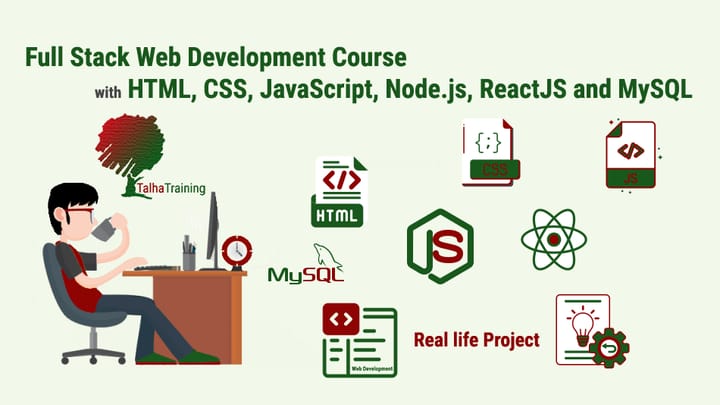
From Learner to DeveloperHTML to CSS, JavaScript, Python, Django and MySQL — 300 hours from your first responsive page to a complete full-stack application.
Talha Rahman
11 modules
BDT 35,5005 months
DetailsIn this category
Questions about admission, fees or batch timing? Tell us and we will get in touch.
HTML to CSS, JavaScript, Python, Django and MySQL — 300 hours from your first responsive page to a complete full-stack application.
Event-driven architecture, Express, REST APIs, authentication, WebSockets and deployment — the full path through server-side JavaScript.
Routing, CRUD, authentication, pagination, file uploads, rate limiting and documentation — learned by building one complete API from beginning to end.
A free course in building modern, responsive websites. From tags and styles through to a complete page in Bootstrap, all hands-on.
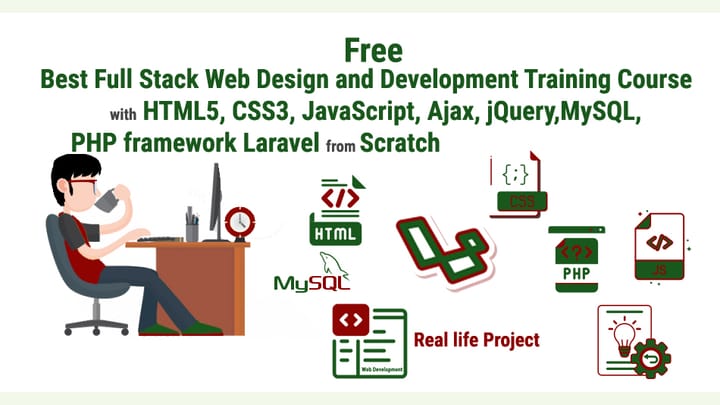
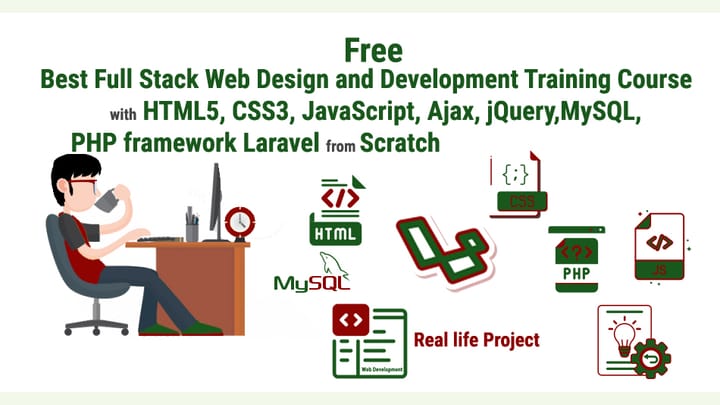
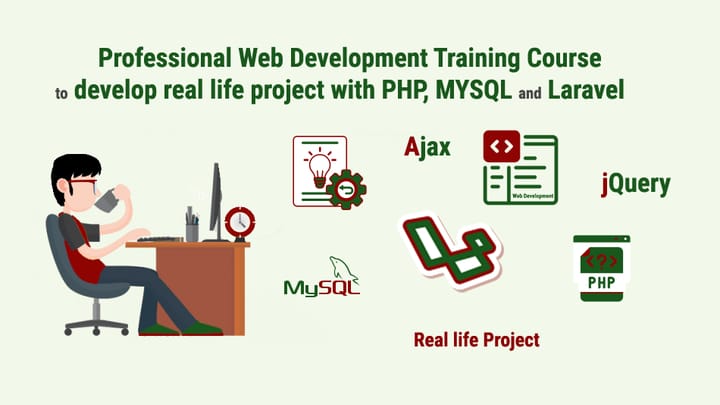
From scratch to both ends of the stack — Ajax, jQuery, MySQL and Laravel, finishing with a live project.
Language foundations through ES6+, async and APIs — everything needed to build interactive pages in the browser.
Go all-in on the JavaScript stack — React for the interface, Node.js on the server and MySQL for data.
Complete preparation for the globally recognised Zend PHP certification — every syllabus area with practice and mock exams.
From routing to Eloquent, authentication and REST APIs — every step hands-on, ending with a complete application.
A one-week classroom course on the opening sections of the Node.js Learn curriculum: getting started, the command line, manipulating files and asynchronous work. You run scripts, use npm, read and write files, and learn why Node.js does not wait. This course prepares for no exam.
A two-day classroom workshop for developers, designers and testers. It uses the four principles of W3C's WCAG 2.2 — perceivable, operable, understandable and robust — as a checklist, and you audit a real site against them. This workshop prepares for no exam.
The same full-stack path with Vue.js on the front end — component-based interfaces backed by a Laravel API.
A complete free video series in Bangla — from the basics through to live project development.
A one-week classroom course on the opening pages of the FastAPI tutorial: first steps, path parameters, query parameters, the request body, validations, and response models and status codes. This course prepares for no exam.
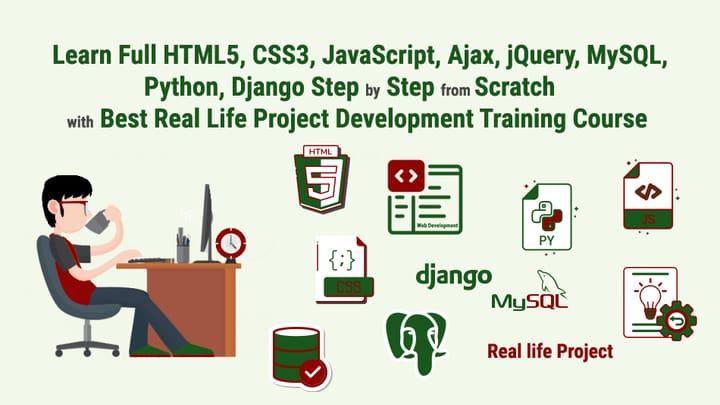
Step by step through the front end and a Python back end — ending with a real-life project.
A short classroom course for developers, designers and testers. It is organised around the four principles of W3C's Web Content Accessibility Guidelines 2.2 — perceivable, operable, understandable and robust — and the three conformance levels A, AA and AAA. Each principle is taught by finding and fixing real failures on a sample site. This course prepares for no exam.
A six-week classroom course that follows the four parts of the official Svelte tutorial: Basic Svelte, Advanced Svelte, Basic SvelteKit and Advanced SvelteKit — components and reactivity first, then routing, loading data, forms, API routes, hooks and page options. You finish with a small full-stack application. This course prepares for no exam.
A classroom course in building applications with Angular. The modules follow the in-depth guides of the Angular v22 documentation: signals, components, templates, directives, dependency injection, routing, forms, the HTTP client, server-side and hybrid rendering, and testing. This course prepares for no exam.
Built the way work actually happens — one real project taken from the first commit to deployment.
A two-month classroom course that follows the language reference of the PHP manual: syntax, types, variables, operators, control structures, functions, classes and objects, namespaces, enumerations, error handling, generators and attributes. It is the groundwork before a framework such as Laravel. This course prepares for no exam.
A classroom course for React developers moving to Next.js. The modules follow the Getting Started pages of the Next.js App Router documentation: project structure, layouts and pages, linking and navigating, Server and Client Components, fetching and mutating data, caching and revalidating, error handling, CSS, image and font optimization, metadata, route handlers, and deploying. This course prepares for no exam.
A two-day classroom workshop on the Vite 8 guide: scaffolding a first project, the command line, features, plugins, static assets, environment variables and modes, building for production and deploying a static site. This workshop prepares for no exam.
From Python foundations to database-driven web applications with Django — beginner to advanced.
A one-week classroom course on the Bootstrap 5.3 documentation: the quick start, layout with breakpoints, containers and the grid, content, forms and the most used components. You finish with a responsive page of your own. This course prepares for no exam.
A two-day classroom workshop on the Sass basics guide, topic by topic: preprocessing, variables, nesting, partials, modules, mixins, extend and inheritance, and operators. You convert a plain CSS file as you go. This workshop prepares for no exam.
A one-week classroom course on two core modules of MDN's web development curriculum: CSS styling basics and CSS text styling. You learn selectors, the box model, colours and units, and how to style text and links. This course prepares for no exam.
A one-week classroom course on the quick start of the React documentation: creating and nesting components, writing markup with JSX, displaying data, conditional rendering and lists, responding to events, updating the screen with state, and sharing data between components. This course prepares for no exam.
A two-week classroom course on the first Getting Started pages of the Next.js App Router documentation: installation, project structure, layouts and pages, linking and navigating, Server and Client Components, and fetching data. This course prepares for no exam.
A two-week classroom course on the Essentials section of the Vue 3 guide: creating an application, template syntax, reactivity fundamentals, computed properties, conditional and list rendering, event handling, form input bindings, watchers and components basics. This course prepares for no exam.
A six-week classroom course that follows the Learn section of graphql.org: first the language — schemas and types, queries, mutations, subscriptions, validation, execution and introspection — then the best-practice lessons on serving over HTTP, authorization, pagination, schema design, error handling, caching, performance and security. This course prepares for no exam.
A one-week classroom course on the Express 5 getting-started pages and guide: hello world, routing, static files, middleware, template engines and error handling. You finish with a small server of your own. This course prepares for no exam.
The easiest route into Laravel if you already know PHP — every concept shown through a small project.
A one-week classroom course on the getting-started lessons at graphql.org: schemas and types, queries, mutations, subscriptions, validation, execution, the response and introspection. This course prepares for no exam.
A one-week classroom course on the first pages of the NestJS documentation's Overview: first steps, controllers, providers, modules and pipes. You finish with a small REST API that validates its input. This course prepares for no exam.
A classroom course in building server applications with NestJS. The modules follow the Overview and Fundamentals of the NestJS documentation: controllers, providers, modules, middleware, exception filters, pipes, guards, interceptors and custom decorators; then custom providers, dynamic modules, injection scopes, lifecycle events and testing. This course prepares for no exam.
A one-week classroom course on one core module of MDN's web development curriculum, CSS layout: normal flow, flexbox, grid, positioning and responsive design. This course prepares for no exam.
A free crash course — tags, structure, forms and layout, ending with your first web page.
A two-week classroom course that works through the Getting Started pages of the Django 6.1 documentation: Django at a glance, installation, and the eight parts of Writing your first Django app. This course prepares for no exam.
A one-week classroom course on the first chapters of the TypeScript Handbook: the basics, everyday types, narrowing and more on functions. For JavaScript developers who want to start using TypeScript on Monday. This course prepares for no exam.
A one-week classroom course on the Basic Svelte part of the official tutorial: components, reactivity, props, logic blocks, events, bindings, classes and styles, and transitions. This course prepares for no exam.
A two-week classroom course on one core module of MDN's web development curriculum, dynamic scripting with JavaScript: variables and types, conditions and loops, functions, events, and changing the page through the DOM. This course prepares for no exam.
A one-week classroom course on the core concepts of the Tailwind CSS 4.3 documentation: styling with utility classes, hover, focus and other states, responsive design, dark mode, theme variables and colours, and adding custom styles. This course prepares for no exam.
A one-week classroom course on the first core module of MDN's web development curriculum, structuring content with HTML: text, links, images, lists, tables and forms, written so that browsers and assistive technology understand them. This course prepares for no exam.
A short classroom course that takes working JavaScript developers through the TypeScript Handbook chapter by chapter: the basics, everyday types, narrowing, functions, object types, type manipulation including generics, classes and modules. This course prepares for no exam.
A two-week classroom course on the first in-depth guides of the Angular v22 documentation: components, templates, signals and directives, with the Angular CLI. This course prepares for no exam.